![Image of Plazoom]()
By Plazoom
Last updated 10 September 2026
Harvest activities offer a useful way to explore where our food comes from, how farmers grow and gather it and why people have traditionally celebrated this time of year.
They also provide plenty of opportunities to bring different areas of the curriculum together. From exploring seasonal changes with younger children to investigating farming in the UK and writing for different purposes with older pupils, harvest can provide a meaningful context for learning.
The harvest activities below offer age-appropriate ways for pupils to:
- Learn about where food comes from and how it is harvested
- Explore the changing seasons and the natural world
- Identify different fruits, vegetables and cereals grown in the UK
- Investigate farming and the geography of different regions
- Find out why harvest is celebrated by Christians
- Develop their reading, writing, vocabulary and discussion skills
Although these resources are particularly suited to the autumn term, many can also be used as part of wider work on food, farming, seasons, plants or traditional stories.
EYFS harvest activities
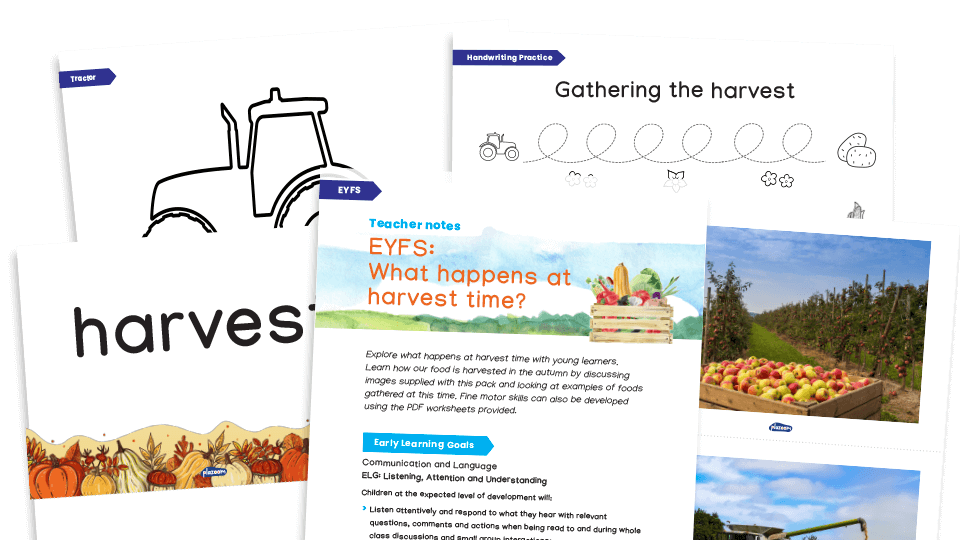
For young learners, harvest is a great opportunity to explore the natural world and talk about changes they can see around them.
Our free EYFS What happens at harvest time? activities pack introduces children to how farmers harvest food in autumn. They can:
- discuss photographs and images
- look at examples of foods gathered at harvest time
- talk about where their food comes from
There’s also a fine motor activity, giving children the chance to practise their pencil control while learning about harvesting.
KS1 harvest activities
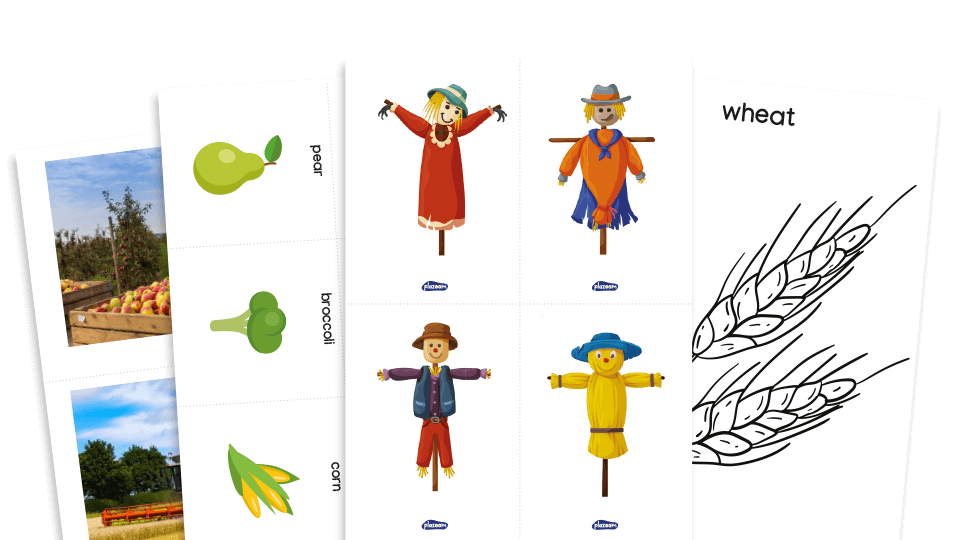
In Years 1 and 2, harvest provides a useful context for combining English with science, geography and RE.
Our KS1 Harvest Festival Writing Composition resources pack explores how Christians celebrate harvest. Use the activities to create a harvest display in your classroom.
Pupils will also use geographical vocabulary to describe images of harvesting and identify cereals, vegetables and fruits that we grow in the UK.
The Enormous Turnip
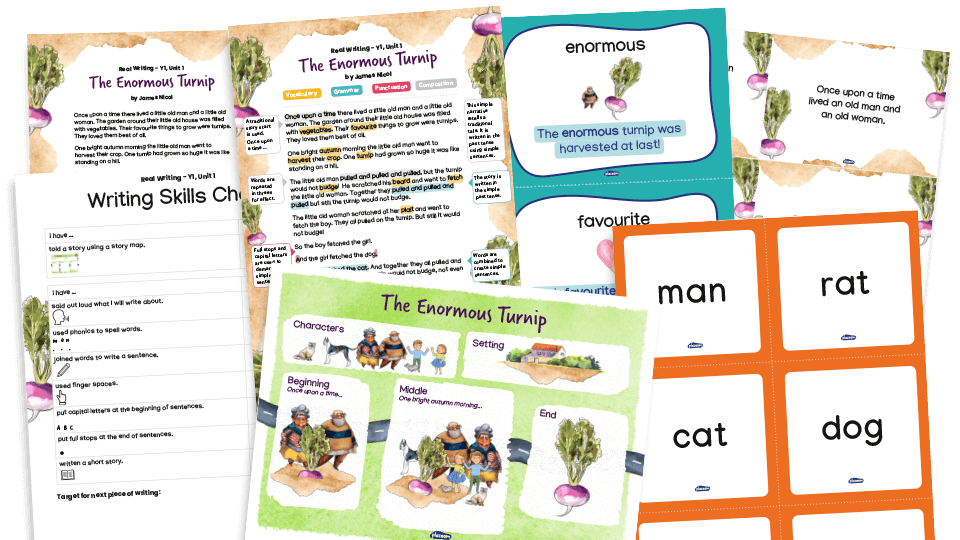
If you’re looking for a harvest-themed story to use with Year 1, our The Enormous Turnip writing unit uses an original retelling by published children’s author James Nichol to help pupils explore story structure while developing foundational English skills.
Pupils will read and act out the story, use story maps and sequencing cards, explore vocabulary and orally rehearse sentences before creating their own imaginative version featuring a different giant vegetable.
KS2 harvest activities
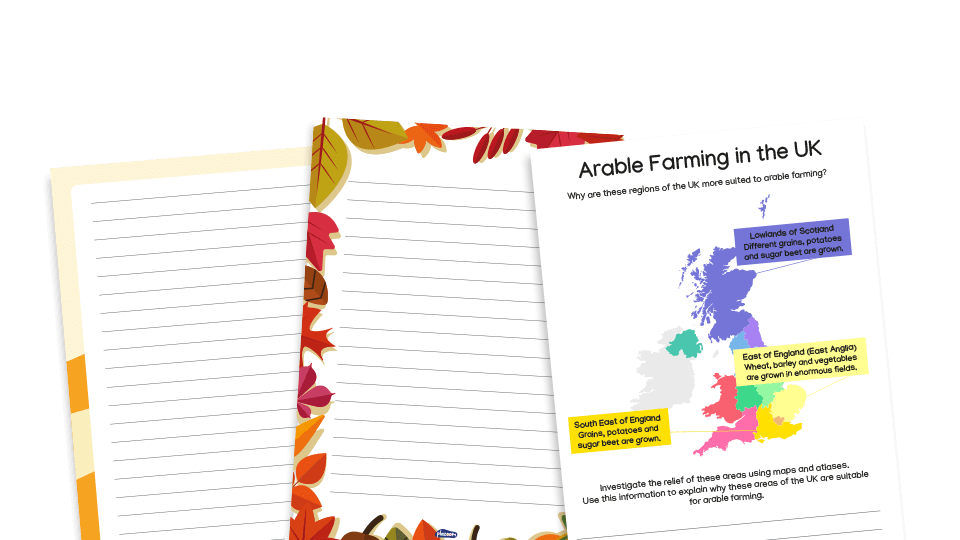
For older pupils, harvest can open up broader questions about food production, farming and religious traditions.
Our KS2 Harvest Festival Writing Composition resources pack combines RE, geography and English.
Pupils will investigate why Christians celebrate harvest and have opportunities to explore their own beliefs. They’ll also learn why particular regions of the UK are well suited to arable farming, using geographical information to develop their understanding of where and how crops grow.
Writing activities include a thank you letter and an explanation, giving pupils opportunities to think about audience and purpose while developing their vocabulary and sentence structures.
Describing a pumpkin patch
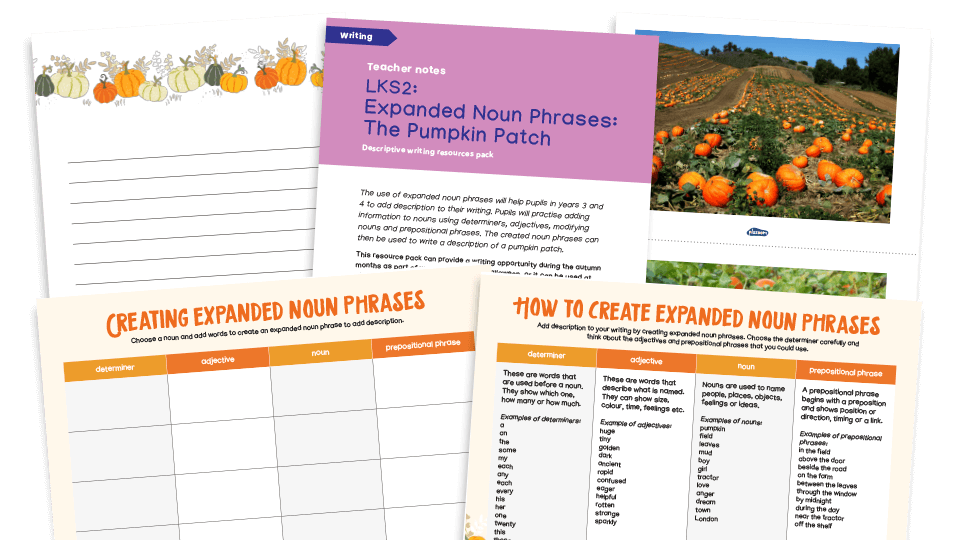
If you’re teaching expanded noun phrases in Year 3/4, our free LKS2 descriptive writing pack uses an autumnal pumpkin patch as its setting.
Pupils will create expanded noun phrases to describe the scene, using determiners, adjectives, modifying nouns and prepositional phrases.
The activity works well alongside autumn or harvest topics, while also giving pupils a clear opportunity to practise an important part of the LKS2 English curriculum.