Lesson plan templates for primary teachers
Take the stress out of planning with these tips, resources and lesson plan templates to make life easier...

Whom do you write your lesson plans for? There is an enduring sense that lesson plans are some sort of sacred document that inspectors will examine in fine detail and give you the thumbs up or thumbs down accordingly.
In fact, as you hopefully know, Ofsted inspectors are not really interested in seeing your plans at all. They are, however, interested in seeing the effect of your plans. So, you will probably want to make your lesson planning as effective as possible.
Here are some pointers for helping you ensure that the way you use your PPA time is practical, productive and astute.
Lesson plan templates
Different schools and different heads have different expectations. It might well be that your school has a rigid template that you are expected to follow. Others might have a more relaxed approach and consider the practical application more important than the bureaucracy.
Either way, you will need to follow your house rules first. Even so, there are certain things that are really important for any lesson plan, so find a way to include them in whatever format you adopt.
The essentials of a good lesson plan template
The basic structure of a lesson was best summarised by the American writer and public speaking guru Dale Carnegie, who said, “Tell the audience what you’re going to say, say it; then tell them what you’ve said.”
He might have been talking about a different context, but the principle transfers well to teaching practice.
Learning objectives and an effective lesson plan
As a teacher, the clearest way to “tell the audience what you’re going to say” is through the lesson objectives – WALT ('we are learning to') as it is also sometimes called.
The important thing here is to make sure that your learning objectives are things you are going to teach, not outcomes. “To write a set of instructions” is not a lesson objective. “To use imperative verbs” could be.
It is also important to share the objective with your pupils and make sure they understand it. If necessary, double-check with them to ensure that it’s at the forefront of their minds.
Rounding up your lesson content
Bringing your classroom lesson to a satisfactory conclusion can be something of an art form. Sometimes that art can have an element of improvisation, depending on how the lesson actually went.
However, it also helps to have some idea of how you would like to approach the plenary so it makes sense to make space for one in your plan.
The meaty middle of a solid lesson plan
Without going into too much detail, whatever the lesson, make sure that it is at an appropriate level, follows a logical progression and actually teaches what you intended to teach.
It is also well worth thinking about how you are going to gauge how well they have learned, so it makes sense to plan your assessment or success criteria.
Unit lesson plan templates
Lesson planning for English is usually best done on a unit-by-unit basis. As ever, there are many ways you could do this.
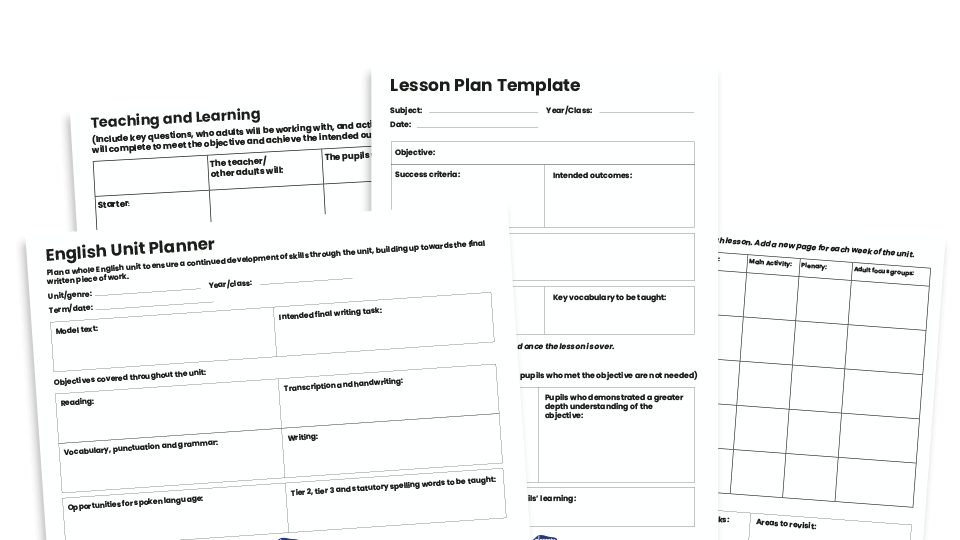
We offer an editable lesson plan template and English unit planning grid to help you ensure you have all the ingredients of a lesson plan covered.
Guided reading – choose your text well
If you are a book lover, you will probably have countless books you are keen to share with your class. But remember, you are trying to teach specific objectives, not start an author’s fan club.
So, make sure that the text on which you base your unit exemplifies all the objectives you want to teach. If you already have the perfect extract in mind, great. If not, you might want to think about using a model text written specifically for that purpose.
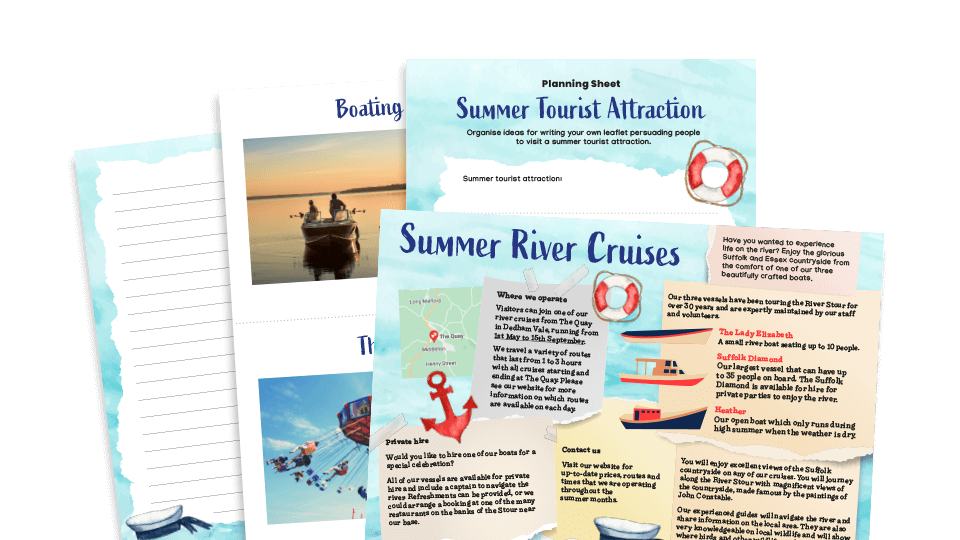 KS2 model text featuring persuasive writing elements, modal verbs and layout devices
Make vocabulary a learning goal
One of the easiest things to forget is the specific teaching of vocabulary. Make space in your plans – lesson and whole unit – for activities that explore key words.
These might be from the statutory spelling lists or Tier 2 and Tier 3 words with which you can enrich pupils’ own personal lexicons.
Punctuation and grammar lesson planner
Dedicate specific sections of your unit to the explicit teaching of punctuation and grammar objectives. It’s not enough to point them out as you are sharing the text and hope that each student can remember when it comes to independent writing.
Equally, it is usually better to teach these ideas in context. Therefore, it's really useful to base your units on texts that include these features. That might take some forethought but it will be worth it in the end.
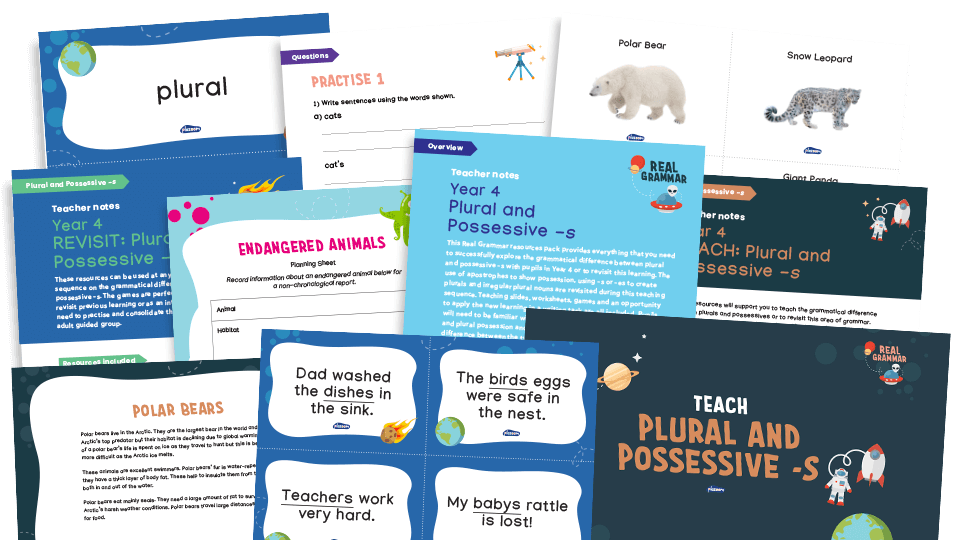 Year 4 unit explaining the grammatical difference between plural and possessive -s
Free lesson plan templates – it’s OK to accept help
As a teacher, one of the strangest feelings comes when you are sweating over a plan, knowing that, around the country, there are hundreds, if not thousands, of teachers planning almost exactly the same lesson.
Of course, you might feel a strong urge to spend large sections of your non-teaching time crafting lessons in your own inimitable style.
If not, however, don’t feel guilty about using what someone else has done – assuming it meets your needs.
We offer a range of prepared lesson plans, from grammar-focused units on features such as cohesive devices to a persuasive unit through which pupils will try to convince their teachers to eat insects. Help yourself.
Now you have a solid template for planning your English lessons, you will hopefully feel more confident about filling the gaps in a way that best meets your pupils’ needs.
Sue Drury qualified as a primary teacher in 1999. Teaching pupils from Year 1 to Year 8, she has held a variety of positions including maths and English subject leader, year leader, and assistant headteacher. Sue has mentored students and NQTs, offering guidance and advice using her years of experience. She created many of Plazoom's literacy resources.