Phonics resources – Advice and printables for KS1 teachers
Suddenly found yourself in Year 1? This back-to-basics 'how to teach phonics' teacher guide with recommended phonics resources will help you support pupils in their first reading steps...
One of mankind’s greatest advances was to turn the sounds they spoke into meaningful marks, be they on clay tablets, pieces of paper or electronic devices.
Using writing to create lasting records of thoughts, orders or stories enabled us to communicate ideas without the need to be there in person.
Once we become fluent readers, it is easy to forget how difficult it was to start reading. After all, the lines and squiggles on the page are not intuitive representations of the sounds to which they correspond.
What’s more, the system is riddled with multiple options as well as inconsistencies. Which is why the prospect of teaching phonics can be rather daunting if you are new to it. Here are some ideas to help you settle in...
Phonics approach/schemes
By the time they enter Year 1, we expect children to have already started using phonic knowledge to decode regular and familiar words and read them aloud accurately. Sadly, however, life does not stay as simple as C-A-T for long.
We can represent the 44 sounds of the English language in a variety of way. It's a significant challenge to learn all of them.
Not surprisingly, therefore, a whole industry has emerged to create and phonics resources and programmes for schools. We won’t be taking any sides here however. Hopefully the ideas we express will be true for most if not all of these schemes.
Phonics lesson terminology
It is important to learn the terminology, both for you and the pupils. Here are some key examples:
- Phonics: The sounds we make and hear in speech
- Phoneme: A distinct unit of sound in speech
- Grapheme: How a sound can be represented with one or more letters
- Digraph: A grapheme that uses two letters to represent one sound, eg ch, oo, ay
- Trigraph: A grapheme that uses three letters to represent one sound, such as igh, air and tch
- Split digraph: Creating one sound, typically a long vowel sound, by sandwiching a consonant between a vowel and the letter e, as in time, late and tune
- GPC: Grapheme-phoneme correspondence (the sound that a letter string makes). You will see this mentioned frequently in National Curriculum documents.
- CVC word: A three-letter word that we spell with a consonant-vowel-consonant pattern, such as ‘bag’, ‘dog’ or ‘red’
Phonics instruction – pronunciation
Be really precise with your pronunciation. There is a temptation to overemphasise some sounds so that an extra sound, sometimes called a schwa, gets tagged on.
For example, when pronouncing the sound made by the letter f, you can find yourself saying something that sounds more like fuh. The uh sound, the schwa, is very short but definitely there.
The reason this is important is because it could prompt children to pronounce it when blending letters to make words. This leads to them say something that sounds like fuh-i-tuh instead of fit. If in doubt, study a video of a phonics expert pronouncing phonemes correctly.
Phases – best order to teach phonics?
Schools tend to teach phonics in phases. You introduce pupils to the sounds, letter combinations and common exception words of increasing complexity. It's important that you look up and become familiar with the demands and expectations of each one.
How to teach phonics to kids – practise, practise, practise
The key is to give plenty of regular practice, preferably in short bursts of phonics activities and phonics games, focusing on a handful of graphemes and phonemes at a time.
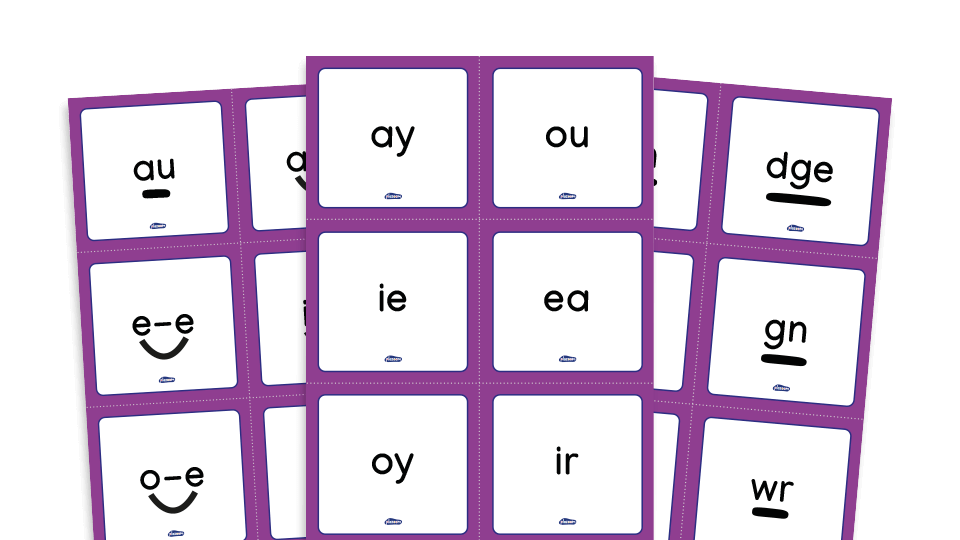
Phonics resources such as flashcards are very useful here and will probably be provided by whichever phonics programme you are using.
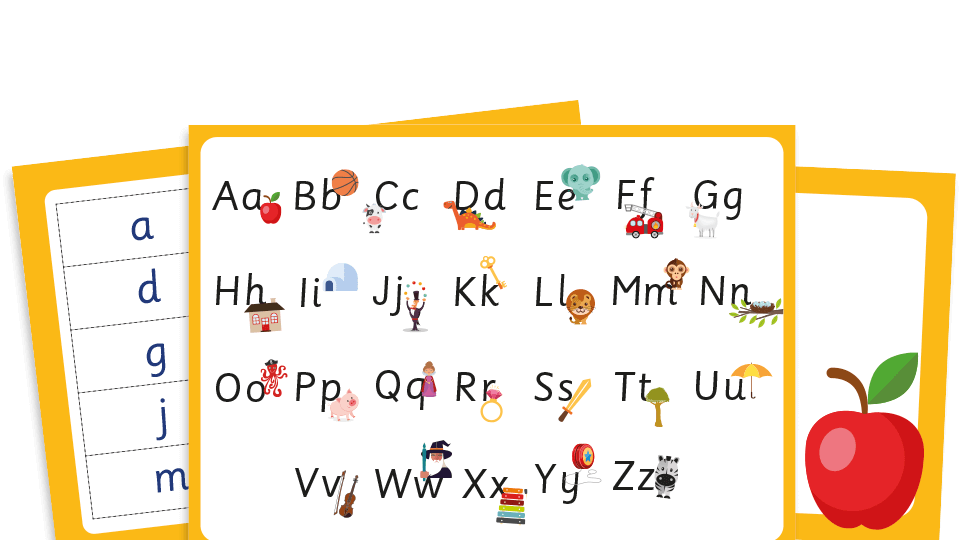
It is also helpful to have obvious reminders of graphemes and the sounds they make, such as our alphabet display pack, permanently in view.
Phonics teaching – blending
This is the process of putting the individual phonemes together to make the word represented by the graphemes.
You do not need to wait until pupils have learned most of the GPCs in the English language – get them blending sounds to read words as soon as possible.
This will usually involve saying the individual phonemes, then repeating them with increasing speed until they have all smeared together to make the single word. We often gauge reading fluency, in part, by the pupil’s ability to read without overt blending.
Phonological awareness – segmenting
The reverse of blending, this means splitting a word – typically a new word, tricky word or an unfamiliar word – into its constituent sounds to help work out what it is. You can do this orally or by marking each individual grapheme within the word in question.
Phonics assessment – alien/nonsense words
In order to find out how well students understand the phonics they have learned up to a particular level, we often confront them with ‘alien’ words.
These are nonsense words that you can sound out using phonics knowledge. They're usually accompanied by pictures of strange little creatures to hammer the point home.
Phonics screening check
In order to help teachers assess whether pupils’ phonics knowledge has met the expected standard, they are given an official screening check.
This involves asking children to read a selection of words that contain most if not all of the GPCs we expect them to know by the end of Year 1.
Pupils can retake it at the end of Year 2 if they did not meet the threshold score the first time. As it includes ‘pseudo’ words as well as real words, it is important that pupils are already familiar with the concept of alien words.
Phonics resources for teaching
Although they do introduce some new GPCs, the higher phases tend to focus more on common exception words and particular letter strings, as well as revising previously learned sounds and improving blending and comprehension skills.
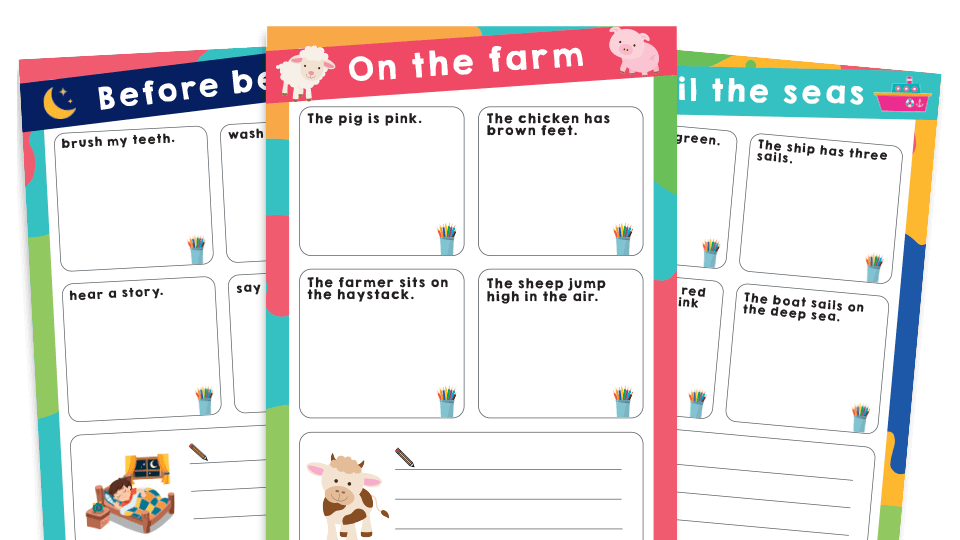
To help with this, we offer Year 1 reading comprehension packs and phonics resources for both phase 4 and phase 5.
Phonics game resources
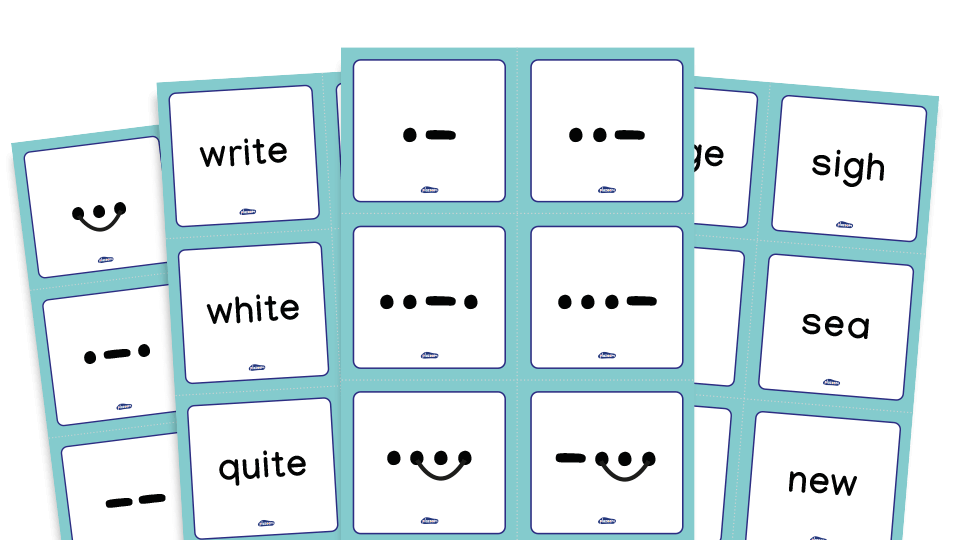
This resource helps Year 2 pupils practise and apply their phonics and spelling knowledge through the ‘Dots and Dashes’ game, developing their segmenting skills and ability to match sounds to the correct letters.
It builds on prior phonics learning and includes ready-to-use cards plus blank cards for teacher additions. We have similar resources for Year 1, Y3/4 and Y5/6.
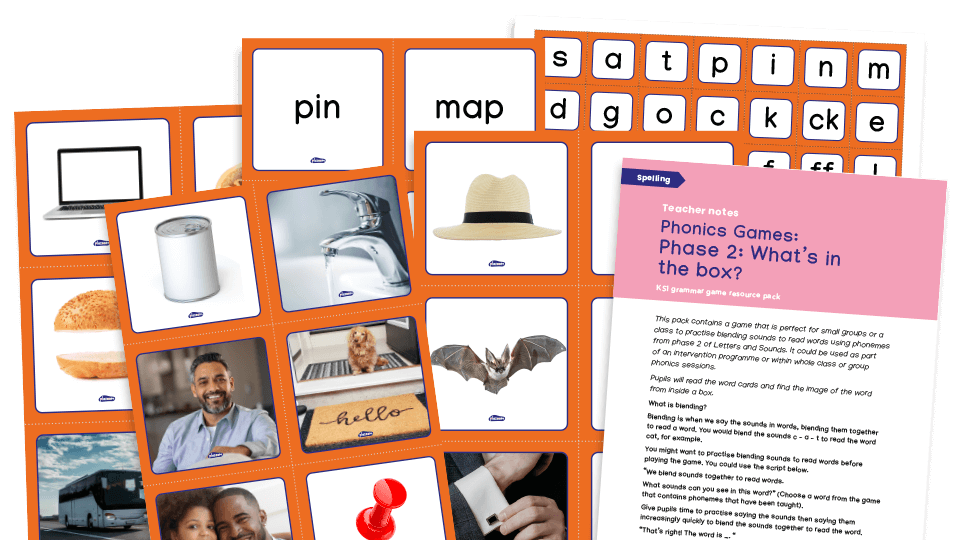
‘What’s in the Box?’ helps pupils practise blending Phase 2 phonemes by matching word cards to images. It reinforces the skill of blending sounds to read words and includes 45 word and 45 image cards.
Remember, this is only a brief introduction to phonics. You will probably need specific training to ensure you are fully equipped to teach it properly. After reading this, however, the whole concept of phonics should not be too alien.
Sue Drury qualified as a primary teacher in 1999. Teaching pupils from Year 1 to Year 8, she has held a variety of positions including maths and English subject leader, year leader, and assistant headteacher. Sue has mentored students and NQTs, offering guidance and advice using her years of experience. She created many of Plazoom's literacy resources.