Creative writing KS2 – Tips, prompts and cross-curricular ideas to inspire stories
Inspire sophisticated stories with these cross-curricular creative writing tips from experienced teacher Sue Drury to get KS2 children's imaginations active...
It was terrifying. As they all stared at it, a feeling of intense dread grew in the pits of their stomachs and swept throughout their bodies.
Their hands started to shake. Beads of icy sweat began to blossom on their brows. Their eyes swam in and out of focus. What could they do? Where could they start? How could they overcome the horror of …
…THE BLANK PAGE!
Probably the most difficult part of any creative writing exercise comes long before you put pencil to paper or brush to palette.
If you need a spark to get your creative motor running, the same will probably be true for your KS2 class. So, what can you do if your dream machine has a flat battery?
The following tips, pointers and creative writing activity ideas might provide the jump-start you need to avoid writer's block...
Plots as a creative writing prompt in KS2
According to an idea most famously popularised by Christopher Booker, there are only seven basic story plots:
- overcoming a monster
- rags to riches
- the quest
- voyage and return
- comedy
- tragedy
- rebirth
Knowing this could form the basis of one of your creative writing prompts. It might also make you stop and think if your great idea doesn’t really fit into any of those categories.
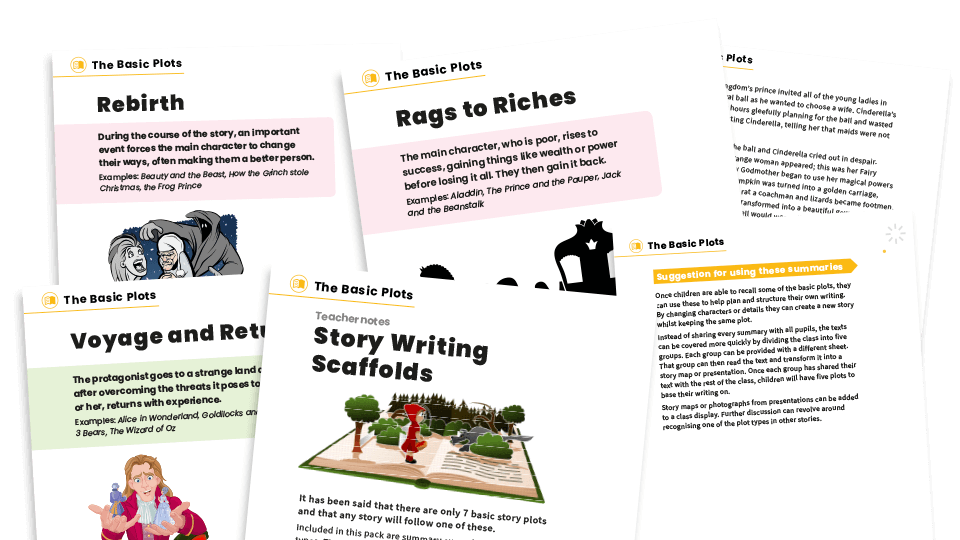
This 13-page KS2 narrative writing resource helps pupils explore five key story plots through familiar stories. Children will analyse these texts and then adapt characters or details to create their own tales.
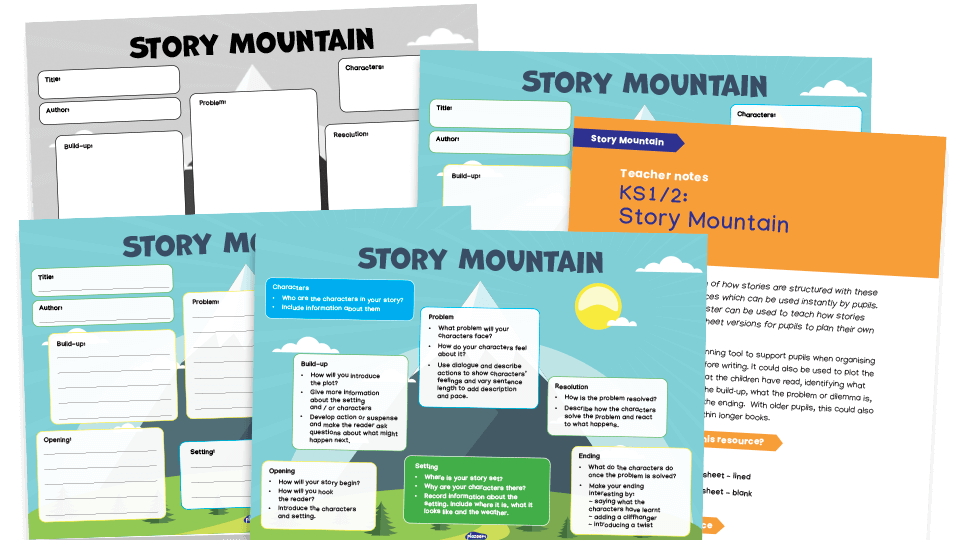
Alternatively, our Story Mountain tools help KS2 pupils plan and structure their stories. The pack includes a poster, lined and blank planning sheets and teacher guidance.
Writing process – style and genre story prompts
If you consider it prudent to constrain the imagination still further (and there are very good reasons for doing so with KS2 pupils), you might want to consider the type of story that you want to be written.
Will it be a historical tale, a fantasy adventure, a mystery or a spooky story, for example? Whatever you have decided, this will usually help to focus the mind on the sort of plot that will work well and offer guardrails to avoid the ideas becoming too outlandish.
Show, not tell
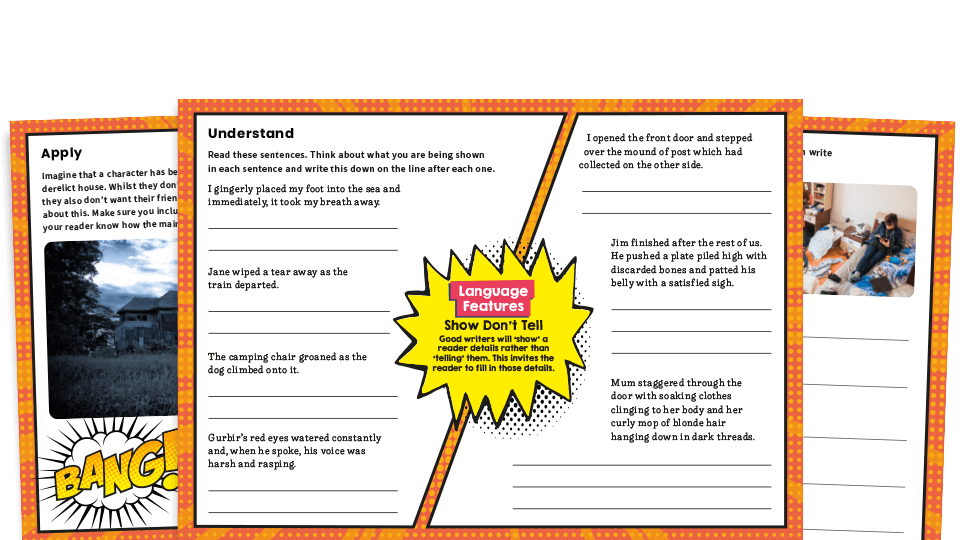
“Show not tell” is a writing technique that helps readers experience a story through actions, feelings and senses rather than through direct statements.
This KS2 resource develops pupils’ creative writing skills using this approach, guiding them to recognise, explain and practise showing rather than telling, with engaging activities that build up to writing their own stories.
Topics – use a cross-curricular creative writing exercise
Another consideration is whether the narrative is going to serve any other learning purpose. Most obviously, you could be aiming for stories that fit in with a particular period you are studying in history. This could be a great chance to stimulate pupils’ imaginations while securing teaching points.
Our model text units are a great way of turning the curriculum into writing topics. For example, we have a two-week Year 6 writing unit based on a model text about a young chimney sweep in Victorian Britain.
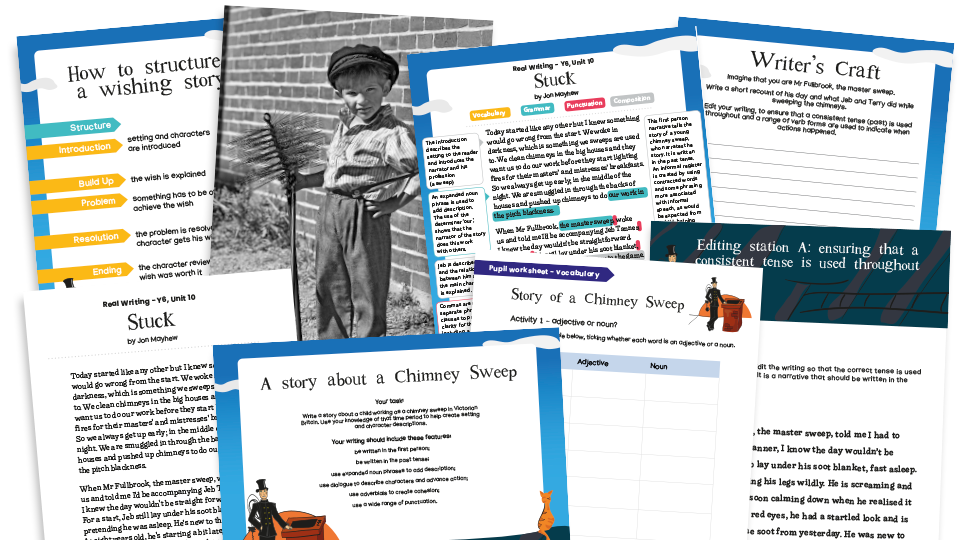
As well as addressing specific vocabulary, grammar and composition objectives, it encourages pupils to learn about the conditions endured by many people at that time and empathise with their experiences.
But history is by no means the only subject that is ripe for a creative twist. We also have a Year 4 model text unit, for instance, with a clear link to science as it deals with issues surrounding the safe use of electricity.
Write a creative retelling
Don’t fall into the trap of believing that creativity equals complete originality. Just think of the many successful books, plays and films that have been based on well-loved stories or characters.
After all, you wouldn’t condemn Leonard Bernstein and Stephen Sondheim for lifting the plot of Romeo and Juliet when they wrote West Side Story.
Many tales are completely compatible with a creative retelling, especially legends. A prime example is Beowulf, especially when you are covering Anglo Saxons as a history topic.
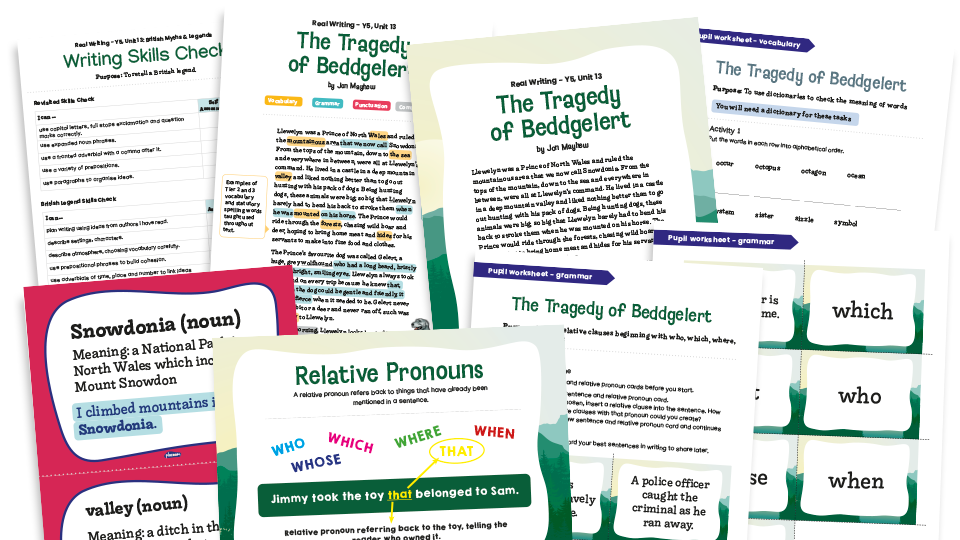
Alternatively, why not try our Year 5 model text writing unit on Beddgelert? Set in Snowdonia, this tragic tale of loyalty and remorse would fit neatly with a geography unit about counties and cities of the United Kingdom.
Story starter writing inspiration
Sometimes, all it takes to get the creative juices flowing is an opening sentence. These are particularly good for finding out how imaginative your pupils are. Just make sure your story starters are sufficiently intriguing.
Even simply suggesting story titles can be enough to get the inspiration flowing. Just like with starters, they do need to offer some clue as to which direction a plot could lead.
If not using it as a creative stimulus, however, it is usually best to decide upon the title after the whole thing has been written.
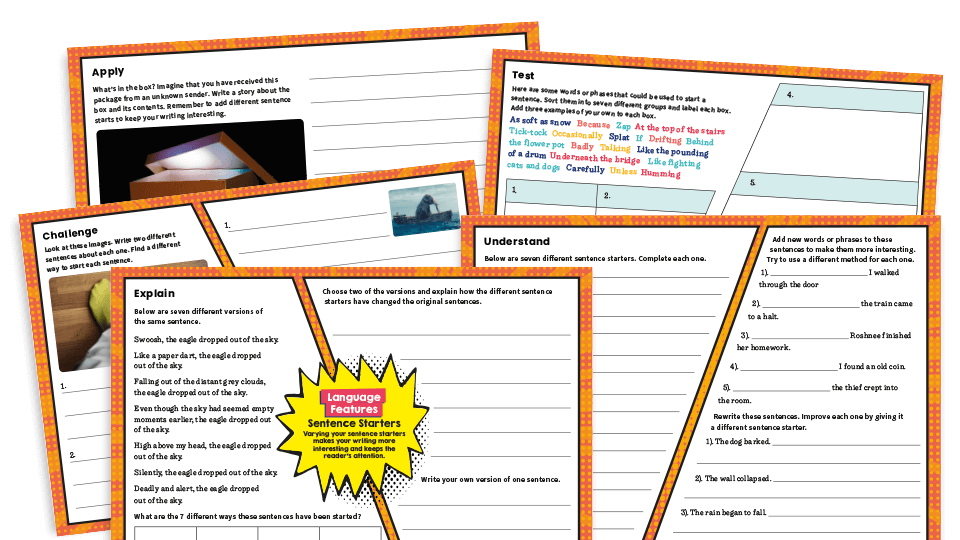
This KS2 resource helps pupils develop creative writing by practising a variety of sentence openers. Through activities like analysing examples and experimenting with images, children will learn how different starters can make their writing more engaging and dynamic.
Creative writers – voice and perspective
A quick word of advice about helping your class decide upon their great idea: the concept alone is not enough. As well as a solid plot, they also need to think about the perspective from which they are writing the story as well as the ‘voice’.
That means that the person (first or third, most likely) has to be consistent. The reader needs to be clear in which direction the author’s overall sympathies lie.
Even though this is more of an objective for higher-level writing, it’s not a bad thing for a young writer to start thinking about.
Creative ideas for every student
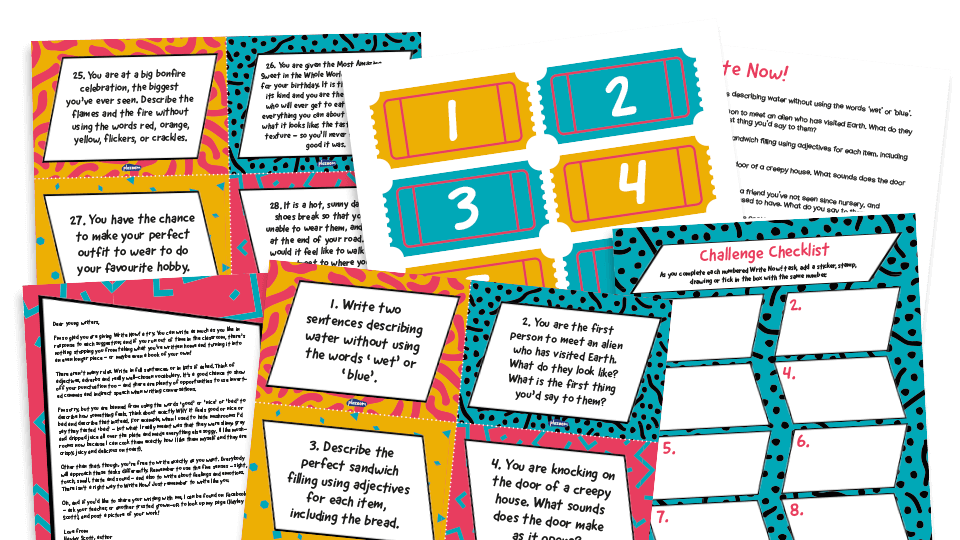
If all else fails, ask someone who knows. Through our Write Now series, we offer five great resource packs containing 200 original and inspiring prompts from teacher and published author Hayley Scott.
Hopefully, you and your class will now feel fully equipped for slaying the beast of the blank page. As the old saying goes, the pen is mightier than the sword.
Sue Drury qualified as a primary teacher in 1999. Teaching pupils from Year 1 to Year 8, she has held a variety of positions including maths and English subject leader, year leader, and assistant headteacher. Sue has mentored students and NQTs, offering guidance and advice using her years of experience. She created many of Plazoom's literacy reso